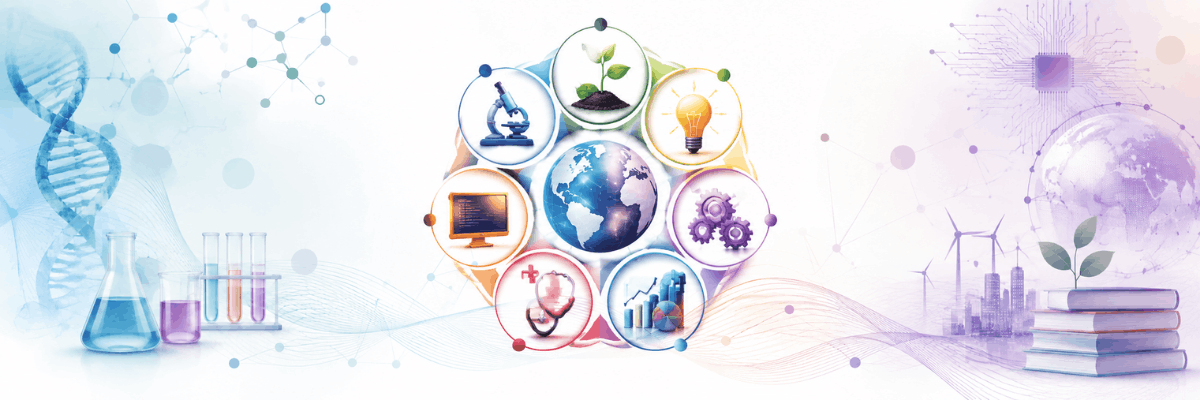

Human civilization has repeatedly been transformed by technological revolutions. The steam engine powered industrialization, electricity changed modern life, and computers launched the digital era. Today, another revolution is quietly taking shape—one based not on machines or silicon chips, but on living systems. Synthetic biology, which combines biology with engineering principles, is emerging as a powerful technology platform capable of redesigning how medicines, food, materials, and energy are produced. By treating biological systems as programmable entities, scientists are opening possibilities that could redefine entire industries.
What Is Synthetic Biology?
Synthetic biology is an interdisciplinary field that merges biology, engineering, chemistry, and computer science to design and construct biological systems with specific functions. Unlike traditional genetic engineering, which mainly modifies existing organisms, synthetic biology seeks to build and program biological components in a systematic and predictable manner.
Researchers view genes, cells, and microorganisms as building blocks that can be assembled to perform desired tasks. Advances in DNA sequencing, artificial intelligence, and gene-editing technologies have accelerated progress, making it possible to design biological solutions with increasing precision.
The ultimate aim is to create living systems that can address challenges in health, food production, environmental protection, and industrial manufacturing.
Transforming Modern Medicine
Healthcare is among the sectors experiencing the greatest benefits from synthetic biology. Scientists are engineering bacteria and yeast to manufacture vaccines, hormones, and therapeutic proteins more efficiently than conventional production methods.
Personalized medicine is another area gaining momentum. Treatments based on an individual’s genetic profile can improve effectiveness and reduce unwanted side effects. Researchers are also exploring gene therapies capable of correcting inherited disorders at their source.
Synthetic biology has contributed significantly to cancer treatment through engineered immune cells that target tumors with remarkable precision. In the future, bioengineered tissues and organs may provide solutions to shortages in transplantation and regenerative medicine.
Revolutionizing Agriculture and Food Production
Feeding a growing global population while preserving natural resources represents one of humanity’s greatest challenges. Synthetic biology offers innovative approaches to sustainable agriculture.
Scientists are developing crops with enhanced resistance to drought, disease, and pests, reducing the need for chemical pesticides and fertilizers. Engineered microorganisms can improve soil fertility and increase nutrient absorption, helping farmers achieve higher yields.
Alternative proteins are also attracting widespread attention. Cultivated meat and fermentation-based food products may provide environmentally friendly sources of nutrition while reducing dependence on traditional livestock farming. These technologies could contribute to improved food security and lower greenhouse gas emissions.
Creating Sustainable Industries
Synthetic biology is changing manufacturing by introducing biological production systems that are cleaner and more efficient than many traditional processes. Microorganisms can be programmed to produce chemicals, textiles, and biodegradable materials using renewable resources.
Bio-based plastics, for example, offer alternatives to petroleum-derived products and help address the growing problem of plastic pollution. Scientists are also investigating microorganisms capable of producing biofuels that may supplement or replace fossil fuels.
Because biological manufacturing often requires less energy and generates fewer harmful by-products, it represents an attractive pathway toward sustainable industrial development.
Addressing Environmental Challenges
Environmental applications of synthetic biology are expanding rapidly. Engineered microbes can remove pollutants from soil and water through biological processes that are both efficient and environmentally friendly. Some microorganisms are being designed to absorb heavy metals or break down toxic compounds.
Researchers are also exploring methods to capture atmospheric carbon dioxide and convert it into useful products. Such innovations could support efforts to combat climate change and promote ecological restoration.
Waste management represents another promising area. Biological systems may help recycle materials and convert waste into valuable resources, contributing to a circular economy.
Economic Potential and Emerging Industries
The growing importance of synthetic biology is giving rise to a new bioeconomy. Companies specializing in biotechnology, pharmaceuticals, agriculture, and advanced materials are investing heavily in this field.
New industries focused on DNA synthesis, biological data analysis, and cellular engineering are emerging. Startups and research institutions are developing products that range from sustainable chemicals to next-generation therapeutics.
Just as software became the foundation of the digital economy, synthetic biology could become the platform underlying future biological industries. Nations that invest in research and innovation today may gain significant economic advantages in the decades ahead.
Ethical and Regulatory Considerations
The ability to engineer living systems also raises important ethical questions. Concerns surrounding biosafety, environmental risks, and potential misuse require careful oversight. Society must establish clear regulatory frameworks to ensure responsible innovation.
Questions regarding genetic privacy, ownership of biological information, and equitable access to biotechnology are becoming increasingly relevant. International cooperation and transparent scientific practices will be essential in maintaining public trust.
Balancing technological progress with ethical responsibility will determine how successfully synthetic biology contributes to society.
Conclusion
Synthetic biology represents a new frontier where engineering and life sciences converge. By programming living organisms to perform useful functions, researchers are creating innovative solutions for medicine, agriculture, manufacturing, and environmental protection.
More than a branch of biotechnology, synthetic biology is emerging as a foundational technology platform with the potential to reshape economies and industries. As scientific capabilities continue to advance, the ability to engineer biological systems may become as transformative as the invention of computers or the internet.
The coming decades may witness a profound shift in how humanity produces resources, treats diseases, and addresses environmental challenges. In this new era, life itself could become one of the most powerful technologies ever developed.